E-commerce
What spending my own money on ads changed
Spending the budget of e-commerce businesses I co-owned made me faster at stopping weak ideas and more willing to back strong evidence. The discipline lies in knowing why the next euro deserves to be spent.
Alessandro Picchianti · · 7 min read
A campaign can be interesting enough to keep testing and still fall short of deserving more capital.
I learned to tell those two apart when the ad budget belonged to e-commerce businesses I co-owned and operated.
One result surprised me.
I became more comfortable raising budgets after I became faster at stopping weak ideas.
Ownership made me more selective
You might expect that spending your own company's money makes you cautious.
My experience was more nuanced.
I had managed client advertising for years before Telecard and Ferrucci, the e-commerce businesses I co-owned. Those budgets mattered to me, and they still do.
What changed with ownership was the context around each decision.
The money for advertising came from the same place as the money for stock, fulfilment, people and everything else the business needed.
Every media decision competed with those other uses of capital, and every weak decision had consequences elsewhere in the company.
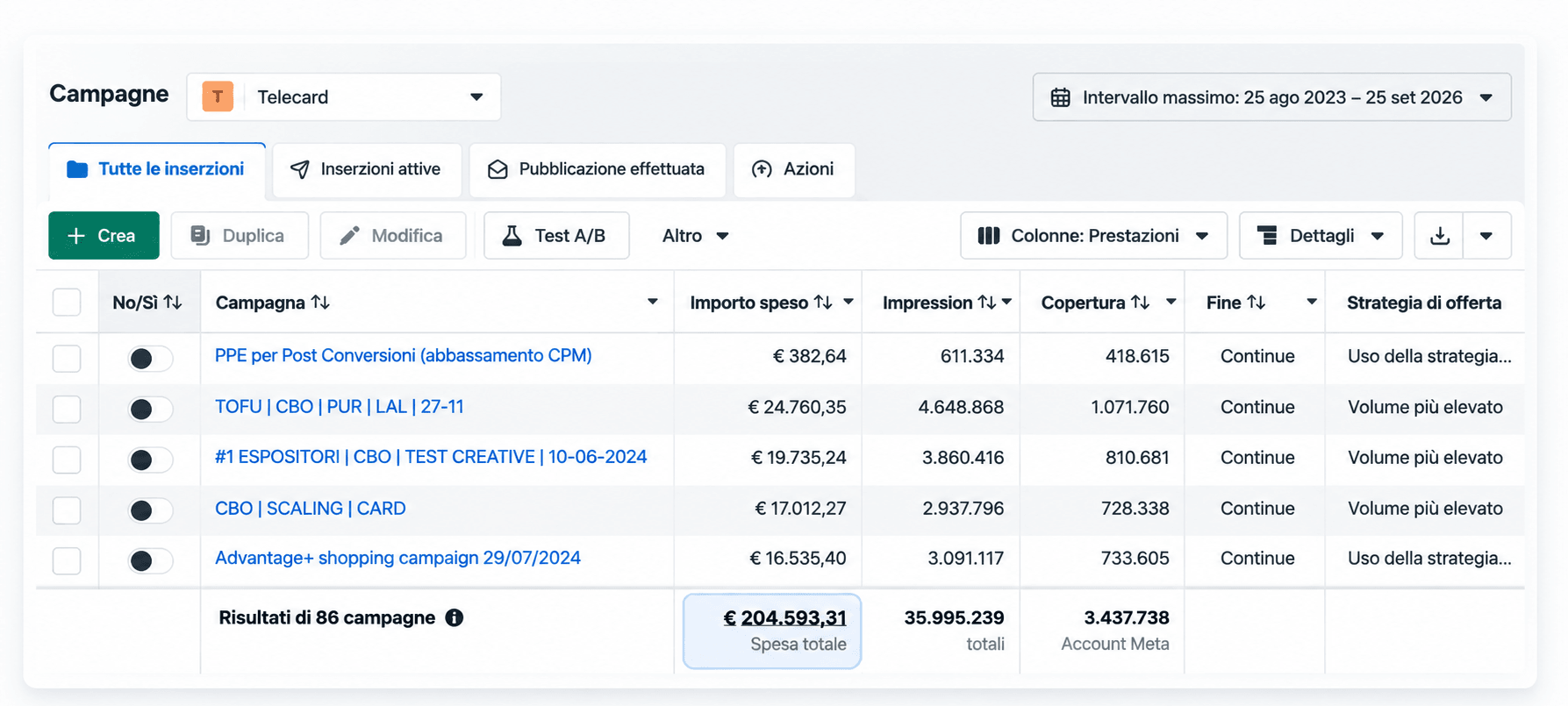
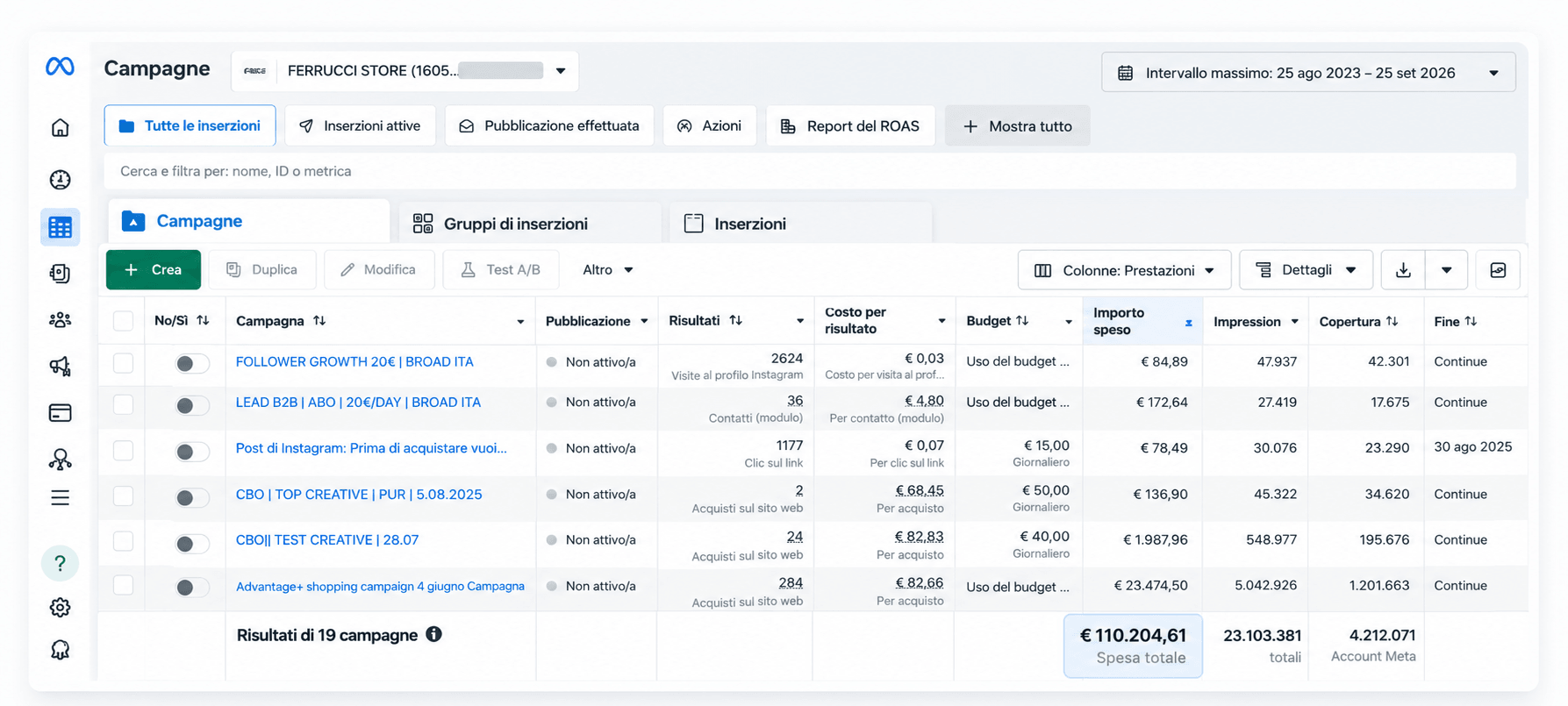
That pressure made me quicker to reject weak tests and more willing to back strong evidence with real budget.
I became less attached to campaigns and more aware of what else the money could do.
I still spent.
I spent with better reasons.
From the outside, both caution and discipline can look like restraint.
The difference is in the reason behind the decision.
A test needs a reason to exist
In advertising, you can test almost anything: a new creative, a new audience, a new offer, a new landing page, a new campaign structure.
The platforms make launching a test easy, and a busy testing calendar can feel productive.
As an owner, I started asking a few questions before each test.
What am I trying to learn?
What decision will this result help me make?
What would make me stop?
If I could not answer those questions, the test probably did not deserve to run.
A test that ends without helping you make a decision costs more than the media spend.
It costs the time required to build it, the time required to analyse it and the attention taken away from something potentially more useful.
A good test earns its place by helping you make a decision.
I became faster at stopping weak ideas
Anyone who runs campaigns knows the temptation to keep a weak one alive.
You spent time building it.
You like the creative.
You believe performance could improve.
You want a little more data before deciding.
I do not see this as a flaw in marketers.
It is a normal human bias, and I have felt it too.
Ownership helped me separate the effort I had already invested from the potential still left in the idea.
The time and money already spent were gone either way.
The relevant question was whether the next euro had a better use somewhere else.
More spend does not automatically improve a weak signal.
Sometimes the best decision is to stop and redirect the budget.
When more data stops adding clarity
"We need more data" is sometimes exactly the right answer.
Sometimes it becomes a way of delaying a decision.
I do not ignore data, and I do not make decisions on impulse.
But as an owner, I had to weigh several things at once: how confident the numbers made me, what waiting would cost, what continued spend would cost and what the same capital could do elsewhere.
So I learned to ask a different question:
How much more information do I need before my decision changes?
If another period of spend is unlikely to change the conclusion, waiting for more certainty also has a cost.
That cost is not only the money being spent.
It is also the opportunity to use that money somewhere else.
Scaling became an evidence decision
I stopped treating a budget increase as a reward for a good result.
A strong result tells me something worked.
Before putting more capital behind it, I want to understand whether the signal is likely to hold.
Is the result consistent?
Is the creative still performing?
Are we acquiring the right customers?
Can the business absorb additional volume?
Do the economics still make sense as spend increases?
The larger the budget decision, the stronger the evidence I want behind it.
Scaling, for me, became less about enthusiasm for a good result and more about confidence in its repeatability.
Learning spend and growth spend have different jobs
This distinction helped me a lot.
Some advertising spend exists to learn.
You test an angle, an audience, a creative or an offer because you are trying to discover something you do not know yet.
Other spend exists because the system already works and the goal is to capture more demand.
Those are different jobs.
When you confuse them, expectations become unclear.
A test does not always need to be profitable immediately if it produces information valuable enough to improve the next decision.
At the same time, growth spend cannot be defended indefinitely as "learning" if the evidence is no longer improving.
I became more comfortable accepting the cost of a test when I knew what information I was trying to buy with it.
And I became less patient with spend that continued without producing either growth or useful learning.
Opportunity cost became visible
Every euro spent on advertising is a euro that cannot simultaneously go into stock, product, people, creative production, technology, customer experience or operations.
That changed the way I evaluated media decisions.
A campaign can perform well and still deserve less budget.
Another campaign, a new creative direction, a different product or even a priority outside advertising may offer a better use of the same capital.
So I began comparing options more often instead of judging campaigns only in isolation.
The question became:
Is this the best place for this money right now?
I became more comfortable being wrong
Advertising decisions carry a certain amount of ego.
You choose an idea, an angle, a creative, a campaign.
Naturally, you want it to work.
Ownership made it easier for me to accept quickly when the evidence did not support the original idea.
The business does not care who had the idea.
It cares what happens next.
Sometimes the right decision is to stop.
Sometimes it is to change direction.
Sometimes it is to move the budget.
Sometimes the useful outcome is simply the information you gained.
My job, as I see it now, is to make the next decision better than the last one.
It changed how I manage client budgets too
I treated client budgets with care before I owned a business, and I still do.
What ownership added was a sharper awareness of opportunity cost, evidence, downside and how quickly a test produces something useful.
At Mayor Digital, I bring that discipline into client accounts.
I want every meaningful budget increase to have a reason we can state clearly.
I want every test to answer a question.
I want every scaling decision to have evidence behind it.
That does not mean being cautious for the sake of caution.
It means knowing what we expect the money to do before we spend more of it.
What disciplined spending means to me now
Disciplined advertising leaves room for large budgets.
It leaves room for steady spend.
It also leaves room for tests that lose money.
For me, discipline means knowing what the spend is supposed to achieve.
It means knowing what evidence would justify more capital.
It means recognising when a test has taught you what it can.
And it means being willing to stop when the answer is clear.
The discipline lies in knowing why the next euro deserves to be spent.
Spending inside businesses I co-owned did not make me afraid of large budgets.
It made me much less tolerant of spending without a clear reason.
I am still willing to scale when the evidence is there.
I just want to know exactly why the next euro should be spent.
Alessandro Picchianti